How to finance your lease bike: an overview of the options
13/08/2025
Gross salary exchange, cafeteria plan, mobility budget… Bike leasing can be financed in a number of ways. But which option is the most advantageous for you? Here is an overview of the available options.
Bike leasing is increasingly popular among both employers and employees, and for good reason. The benefits are numerous: it allows employers to position themselves as an attractive employer, with an extra incentive to convince candidates or retain their best staff. It is also a practical solution for companies with limited parking spaces, enabling them to invest in sustainable mobility without having to purchase or manage an entire fleet of bikes.
For employees, it is an opportunity they are happy to take. Bike leasing allows them to look after their health, both on the commute and in their free time, while saving up to 40% compared to a standard purchase. And the cherry on top: insurance, maintenance and roadside assistance are all included in this competitive price. But how is bike leasing actually financed?
The different financing options for bike leasing
You may have already come across terms such as ‘cafeteria plan’ or ‘mobility budget’. But how do these actually work in the context of bike leasing? In this article, we give you an overview of the different options available.
1. Bike leasing via gross salary exchange
The majority of companies working with Cyclis Bike Lease opt for gross salary exchange. But how does it actually work?
The monthly leasing amount is deducted directly from the employee’s gross salary, allowing them to benefit from an attractive tax advantage, a lower gross salary means lower social security contributions and less tax to pay. The employee can therefore use part of their gross salary to finance their bike, provided they remain above the minimum salary set by their collective agreement.
Example*:
You have found a bike worth €2,500. The monthly leasing price is €108 VAT included over 3 years. This amount covers the bike lease, worldwide insurance, roadside assistance, a maintenance budget of €300, and of course the Cyclis service. Please note that this is not the amount deducted from your pay each month. It is the amount invoiced monthly to your employer.
As your gross salary decreases, your employer will pay lower employer contributions. This saving is passed on to you, bringing your monthly contribution down from €108 to €74 gross.
But that is not all: as the amount is deducted from your gross salary, you also pay lower social security contributions. Those €74 gross therefore amount to €41 net on your payslip.
Over 3 years, you therefore pay €1,476 (36 months x €41). At the end of the contract, you have the option to buy back the bike at its residual value, which is 20% of the original price of your bike.
| Bike leasing €2,500 | Amount |
| Monthly leasing cost | €108 incl. VAT |
| Duration | 36 months |
| Included | Bike + insurance + roadside assistance + maintenance (€300) + Cyclis’ services |
| Gross salary reduction | ~ €74/months |
| Net salary reduction | ~ €41/months |
| Total cost (3 years) | €1,476 |
| Purchase (20% of its residual value) | + €500 |
| Final price | €1,976 |
*These figures are provided for illustrative purposes only. Your leasing amount will vary depending on the type of bike chosen, your professional situation and the services you selected.
2. Bike leasing via the cafeteria plan
More and more companies are offering bike leasing as part of a cafeteria plan, also known as a Flexible Income Plan (FIP). This system allows employees to build their own salary package according to their preferences: they can exchange part of their gross salary, their end-of-year bonus, sector-specific bonuses or other benefits for non-statutory benefits such as an eco-friendly company car, a pension savings plan or of course a lease bike.
Example via the end-of-year bonus*:
Let’s imagine you receive an end-of-year bonus of €2,500 gross. The available budget then amounts to €3,125 thanks to the employer contribution (€2,500 x 1.25). If you choose a bike with a monthly cost (= cost invoiced to your employer) of €125, the annual leasing cost amounts to €1,500 (€125 x 12).
You therefore use €1,500 of your budget to finance the lease, leaving you with €1,625 for other non-statutory benefits. If you choose to receive this remaining balance in cash, it will be reduced to €1,300 gross after deduction of the employer contribution (€1,625 / 1.25), which is approximately €650 net.
| End-of-year bonus and cafeteria plan | Amount |
| Gross end-of-year bonus | €2,500 |
| Available budget (+25% employer contribution) | €3,125 |
| Bike leasing | |
| Monthly cost | €125 |
| Yearly cost | €1,500 |
| Remaining budget (for other benefits or gross salary) | €1,625 |
|
Conversion to gross salary (÷ 1.25)
|
€1,300 |
| Conversion to net salary | €650 |
*These figures are provided for illustrative purposes only. These amounts depend on your personal professional situation.
3. Bike leasing via the mobility budget
Employees who have a company car, or are entitled to one, can under certain conditions exchange it for a mobility budget. This budget can then be freely distributed across three pillars, depending on the options offered by the employer:
- Pillar 1: an eco-friendly company car
- Pillar 2: sustainable means of transport (e-bike, housing costs,…)
- Pillar 3: you can opt to receive your mobility budget in cash. Please note that, unlike the first two pillars, this option is not tax-efficient, as the amount is subject to an employee contribution of 38.07%.
Example*:
Imagine an employee has a mobility budget of €600/month. They use €450 per month for a company car and the remaining €150 for a lease bike. If the desired bike is more expensive and their budget is insufficient, they have the option to top it up with part of their gross salary.
| Mobility budget | Amount |
| Total available budget per month | €600 |
| Car leasing | €450 |
| Bike leasing | €150 |
| Option if the bike is more expensive | Top-up via gross salary |
*These figures are provided for illustrative purposes only. These amounts may vary depending on your professional situation.
4. Bike leasing via net salary
This is the least advantageous option, as unlike gross salary exchange, it offers no tax benefit. In this case, you pay the full leasing cost out of your net salary. This option is generally chosen by companies whose employees are paid according to a strict pay scale, which does not allow them to exchange part of their gross salary to finance the bike.
Still unsure whether to lease or buy?
In this article, we explain why bike leasing is often the more advantageous and appealing option.
Get inspired

0News
Bike leasing for the public sector and education in Belgium

0Trivia
Bike leasing for the self-employed: How does it work?
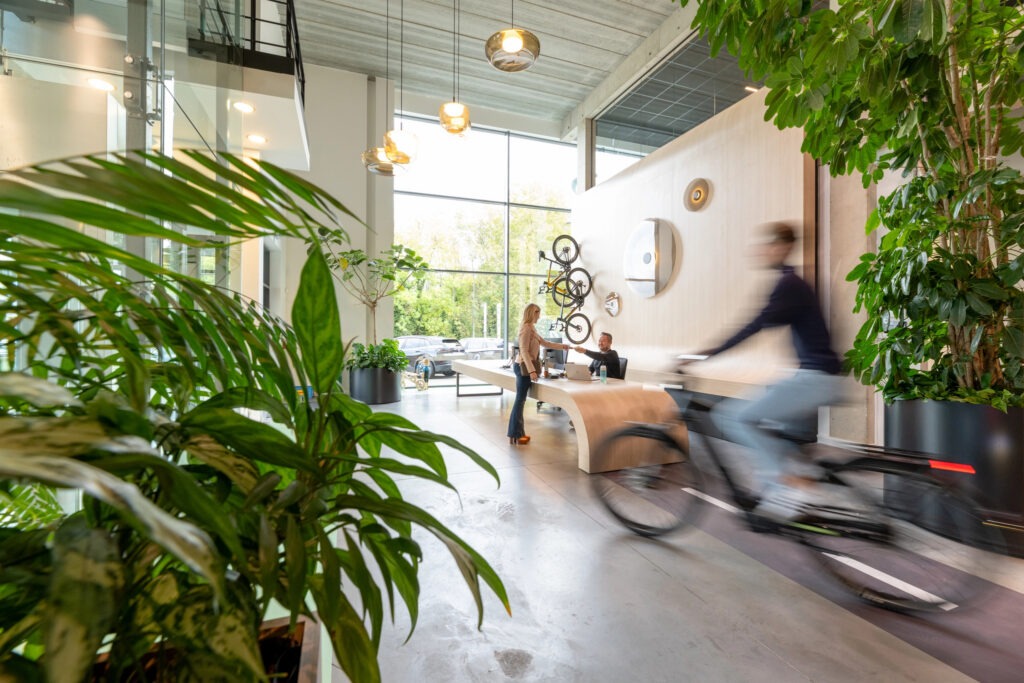
How bike leasing comes to life in the workplace

0Trivia
Mobility budget 2027: start now, ride smoother later
0Trivia
Why lease a bike instead of buying it?

0Trivia
Bike leasing for the healthcare sector (PC319, 330 & 331): opportunities and benefits for healthcare institutions
News
Bike leasing for the public sector and education in Belgium
Trivia
Bike leasing for the self-employed: How does it work?
How bike leasing comes to life in the workplace
Trivia
Mobility budget 2027: start now, ride smoother later
Trivia
Why lease a bike instead of buying it?
Trivia
Bike leasing for the healthcare sector (PC319, 330 & 331): opportunities and benefits for healthcare institutions
Do you want to be the most
informed cyclist?
Subscribe to our newsletter.
Subscribe and, like 2000+ cyclists, receive all the
cycling news, tips and inspiration.
And no fear, we don’t like spam either!